Tuesday, September 13, 2011

In search of KAWARI NI

Ok... So, is it really pop culture if it's ten years old?

Let's just pretend that's a philosophical question with no answer, so I can go ahead and present to you this:


Ok, I put that one there because it has the lyrics written in Japanese very convenient like. However, I'd rather show you this one because it may get you interested in one of my favorite JDRAMAs of all time, WATERBOYS!


See? Much better video, right? Right.

In any case, because I was desperate to find a way to talk about WATERBOYS today, I was ecstatic to find that the end theme uses one of the JLPT grammar points.

What is it?

See if you can find it in this sentence:

サヨナラかわりに
君がくれたんだ この勇気をくれたんだ

Sayonara kawari ni
Kimi ga kuretanda Kono yuuki wo kuretanda

So, I helped you cheat a little bit by bolding it, so what?

KAWARI NI, if you didn't read the blog post's title, or pay any attention to my not-so surreptitious bolding of the word, is going to be your grammar point for today. Surprise!

You will hear this grammar form a lot in Japan since it's pretty convenient. The verb it's derived from (kawaru) means to change, so that should give you a bit of an idea of what this particular form means.

PSYCHE! It should give you half an idea, because this particular form has three usages. Awesome.

3 Uses:

1. Don't do this (a), do this (b)!
2. In place of this(a), this(b) is the proxy.
3. In exchange for something(a), a befitting something else(b) is done or given.

Does the third one sound like NI KAWATE? Why yes, it does! So we're going to 一石二鳥 and get that grammar point of the way too, but first, let's examine which one of these is used on the lyrics above.

1. Don't do this, do this!

I think I'm going to do some sentences that are WATERBOYS appropriate. So... let's go!
  • 母さんをがっかりさせるかわりに、ウソをついた方がいい。
  • Kaasan wo gakkari saseru kawari ni, uso o tsuita ho ga ii.
  • Pretty Translation: It's better to lie to your mother than disappoint her.
  • Literal Translation: Instead of disappointing your mother, you should lie to her.

Does the above plan work in the show? Yes. For like, two episodes. In TV world, I'd say that's a resounding success. Of course, when the mom finds out, beatings for everyone! Hurrah!

In any case, I feel that I need to reiterate that translating is not an exact art when it comes to Japanese and English. If it were, no one would watch Japanese anything, because the two really just don't go together. What I am trying to do here is show the feeling behind it, so you can sense how the word is being used on your own.

2. In place of this...

男たちがプールを使うかわりに、温泉に練習しなければならなかった!
Otokotachi ga PUURU wo tsukau kawari ni, onsen ni renshuu shinakarebanaranakatta!
Translations: The boys had to practice in an onsen instead of using the pool!

Did this happen in the series? Yes, and it's hilarious... especially since onsens are much shallower than pools are.

In any case, I think you may be sensing a trend with the word I'm using to translate for both 1 and 2. If so, good call. Let's see if you're right in the next one!

3. In exchange for something....

  • たかはらさんに泳ぎ教えてくれるかわりに、シンクロのチームを参加することになっている。
  • Takahara-san ni oyogi oshiete kureru kawaru ni, SHINKURO no CHIIMU wo sanka suru koto ni natteiru.
  • In exchange for teaching Tanaka how to swim, he decided to join the Synchro team.

If you were hoping that this one would also translate as "instead", bummer. I was hoping it too, but it's not the case. So, I guess the best way to really understand this word is know that it is one thing in place of another. That's it.

And yes, I totally snuck in KOTO NI NATTIERU from last week's grammar point. Why? Because I'm totally sneaky like that, especially when I point out where I'm being sneaky. Right? Right.

So, which one of these forms do you think the song lyric is?

サヨナラかわりに
君がくれたんだ この勇気をくれたんだ

My money, of which I have very little, is on 3, though I do think 2 could easily work as well, because here are the two ways you can translate this:

1. You gave me this in exchange for saying goodbye. You gave me this courage.
2. Instead of saying goodbye, you gave me this, you gave me this courage.

Oh crap, they have opposite meanings! I'm going to try and solve this with the power of context! The lyric before it is "I have to go", and later on he talks about "meeting again" so.. my money is still on the first translation. Also, this dude translated it almost exactly the same way I did, so I'm going to think it's the first translation in this case. But, it's interesting how the other one goes, right?

Also, don't forget that KAWARI NI 3 and NI KAWATTE are the same! There! Two grammar points down! Phew! Plus, a little bit of spreading the WATERBOYS love around.


Plus, it has Moriyama Mirai, one of the most diversely capable actors Japan has seen in a long time. What more could you ask for! What more? Really? You need more? Well, it also has one of the other most capable actors Japan has to offer, Yamada Takayuki. That's right. The Densha Otoko. Boo-yeah!

Sunday, September 11, 2011

In search of DARAKE and MARUDE

Today's blog makes me happy because it taught me that I completely misinterpreted the use of a grammar point two years ago. I'm a little embarrassed that I got it wrong, but I'm more than glad that I figured out how to use to properly. Nice. Now I get to tell you about it!

Yet again, we have a lucky day here at JLPT Blues, because we have a song with two grammar points! Yes! And it's by one of my favorite singers, Okuda Tamio. (I also maintain a Okuda Tamio Livejournal Community if you are interested.)

I'd love to tell you that Okuda Tamio is beyond cool, but the truth of the matter is that he used up his cool in the 80s when he was doing things like this with the band UNICORN:


Isn't he awesome? No? Well... whatever. I love it.

Of course, the people that listen to him nowadays seem to be mostly mothers who used to listen to him when they weren't mothers. Such is the downward spiral of fame, I guess.

So, let's get to today's grammar points, shall we? The song is 674 of his 29 album:


茜の空がまるで お部屋を血に染めるのよ
枕はヨダレまみれ 背広はとてもキレイよ
あぁいっそ 地球も 大予言どうりに
たらだらだらけの ばか野郎 だけどムナシさは知ってる

あぁいっそ このまま 心臓も 動く
反則男だ ばか野郎 とても 自らを知ってる
  • Grammar Point #1 MARUDE
First, I feel like I should explain the kanji that MARUDE is derived from: 丸で. You may, or may not recognize this to be the same kanji that typically means "round". Now, I will come back to this in a moment to reveal why that's important (well, not really, but it's helpful in remembering the grammar point).

MARUDE is sort of like saying "as if" or "like" (but not like a Valley Girl... as if!). I have not yet discovered whether or not it's appreciably different from YOU NI or YOU NA so expect to hear about that at a later date.

In my favorite MONGOL800 song, Hunky-dory, he sings
  • まるで Fairy tail.
And yes... Fairy tale is misspelled in the original song lyrics =_= I hope that it was on purpose, but who knows? In any case, this translates as:
  • It's like a fairy tale.
Easy, right?
So let's look at the lyric above then, shall we?

  • 茜の空がまるで お部屋を血に染めるのよ
  • Akane no sora ga marude Oheya wo chi ni someru no yo

Sadly, the word akane is a little hard to translate. Most people would probably know this as a name, like:


Yeah. Ranma 1/2. I'm old school. Reeeeealllly old school...

In any case, akane is this red color, which is supposedly called madder in English. I'm told it's a color used often in acrylics by my friends who are actually artists. I am not sure. But I'm rambling, so let's get back to the point at hand.

Translation: Like the madder sky, the room is the color of blood.

Interesting side note: If you want to say something is turned a different color than what it naturally is, like a room during the twilight hours goes pink, or man beneath a streetlight goes yellow, you use someru, which actually means "to dye".


Ok, so let's move on. The reason I say the kanji for MARU is important is because you can sort of think of it as "all around", like whatever you're describing is really like the other thing. I originally thought that MONGOL800 lyric above translated as "It's an all around Fairy-tale" which is sort of similar to "like". Well, if you're me, anyway. As I said, it's really not that important, but I hoped that it may help you remember the grammar point.

  • Grammar Point #2: DARAKE

DARAKE means "to be full of". I don't think it's supposed to be negative sounding, but since the lyric has a bit of a negative context, as well as the example sentences in my Dictionary of Intermediate Japanese Grammar, I wonder if perhaps there is something there that a non-native speaker doesn't really pick up.

I'm going to share with you my favorite example sentence, because... well... it's probably about me, and I love it when people to talk about me.


  • この作文が間違いだらけです。
  • Kono sakubun ga machigai dareke des.
  • This composition is full of mistakes.

Yup! That's me! There goes your faith, right? Well, fortunately I have a book to look at and make sure I got it right. Nice.

How to compose a sentence with DARAKE:

1. Noun A + DARAKE NO + Noun B
Ex: 間違いだれけの作文
2. Subject + HA or GA + Adjective+ DAREKE DESU
Ex: Above example sentence.

Ok, so the lyric, which is very useful for remembering this grammar point is:

だらだらだらけの ばか野郎 だけどムナシさは知ってる
Daradara darake no Bakayarou Dakedo MUNISHIsa ha shitteiru.

I think because of the repetitive daradara plus the DARAKE, it makes it an easy grammar point  to remember. If only the word daradara was easy to translate! Oh well, I did my best with the translation:


I'm an idiot filled with sluggishness, but I do know what futility is.

It took me a while to figure out how to translate this, because I really would just say "I'm freaking lazy, but I know what futility is" but that really doesn't help us much does it? Translating Japanese into English is annoying, isn't it?

Well, there you go! This took forever to write, so I need to go recuperate a little... by studying more. Great.

Friday, September 9, 2011

In search of HODO and TOTTE

Today, we have an exciting day because we have TWO grammar points covered in one lyric! 一石二鳥ね〜 The best part is that it is a lyric to one of the most popular Japanese songs of all time, so you'll never forget either of them.

And I do mean it.

Now, that's what I call good luck here at JLPT Blues.

The lyric in question (which I have linked to the exact second is here):

ほら、あなたにとって大事な人ほどすぐそばにいるの
Hora, anata ni totte daiji na hito hodo sugu sobo ni iru no


If you're interested in Mongol800, please check out my blog dedicated to Mongol800.
  • Grammar Point #1

Okay, so let's start with TOTTE.

TOTTE is used when trying to say "from the viewpoint of", and it's usually used when expressing someone's opinion that they personally hold.

Like:

私にとって数学ホントにめんどくさいよな〜。
To me, math is really annoying.

What's important is that only I have this opinion. Well, I suppose other people have it too, but I'm not assuming. You can do with other things, like...

Prolife NI TOTTE fetus are alive at conception.

So, if we look at the above lyric in question, we can know that since it says あなたにとって it means from the viewpoint of you.

Construction of NI TOTTE

  • Noun + ni totte

Remember! only a noun!

  • Grammar Point #2

It's time for HODO!

Well, HODO is usually taught in conjunction with YORI and NO HOU GA. This way, you can learn how to say something is more than something else, that something is just as something as something else, or will be more something.

Did that make sense... ? Really? I thought it was a rather eloquently constructed description.

Let's try this again.
  • YORI-より More than.
  • NO HOU GA -の方が Better than (or worse than) (sometimes used to suggest something)
  • HODO -ほど Just as

I'm not really going to go into the other two, but I put them there for the sake of grouping them together which is always a great way to remember things.

So, HODO means "to the degree of" essentially, and it's probably one of the most useful words ever in Japanese. Well, behind え〜 and そうですか . Okay, I'm still exaggerating a little bit, but it is very useful. Unlike in English, it is a much more versatile word.

So shall we go into how it works?

マーリン ブランドほどかっこいね〜
He's as cool as Marlin Brando.

This is a very simple use of this. However, the way HODO is used in the song Chiisana Koi no Uta can't be translated so easily. So, let's go back up to the lyric above and see if we can't feel what it means.

大事な人ほど (daiji na hito hodo)

Unromantically, this means that the singer is trying to say that he is the exact degree of an important person. Oddly, and way more than a little confusingly for the Japanese language learner, the most grammatically correct way for an English person to understand this is:
The person who is important.

Wait a minute, what happened to HODO?! Yeah, that happens. It sucks, but nuances don't really translate well. So, if you want to use this in a more fluent way, you probably need to forget about thinking in English first, and just feel it out. In any case, I would argue that this would translate as "the most" because I honestly believe that is feeling behind the lyrics.

So, here it is, my translation of the entire sentence:

Look, the most important person to you is right beside you.
So, that's that. Now may you sing this song at many karaokes, and have it blissfully stuck in your head for many an hour to come.

Also, again, I will mention my MONGOL800 blog. It's a great place to find about some other Okinawan bands, Okinawan culture, and of course, the translations to awesome songs!

Thursday, September 8, 2011

In search of KOTO NI NATTEIRU


Are you ready for some stream of conscious grammar searching? Alright!

So, just for fun, I put ことになっている into the google image search to see if anything interesting would come up. This, was that something interesting:


My favorite is the Potemkin-like catcher.

It's a poster for an event long gone (the post was in February of 2011!) which seems to be some sort of live event with the baseball team, The Hiroshima Carp. The blog post had this written at the top:

広島カープの選手たちの顔が、凄いことになっている件
Hiroshima KAAPU no senshu no kao ga, sugoi koto ni natteiru.

But bad news!


This is not the grammar point you were looking for.

Why is this? Well, some would say it lies in context, but the real truth is that lies in specific grammatical forms.

The KOTO NI NATTIERU is a common phrase, and it usually means "it is becoming [this] thing". This makes perfect sense in understanding the phrase JLPT is teaching us, but it does not go backwards to the less complex form.

You see, the grammar point in the JLPT is supposed to translate as "it has been decided upon", with maybe a dash of "expected to". So if you say:

行くことになっている
Iku koto ni nattieru.

It literally translates as "What will be is us going"... well, kind of, in any case. But what it actually translates as is "It's decided we'll go", or something along those lines... Unless this a porno... then it takes on a whole different meaning. Perhaps we'll make that lesson for another day.... maybe... on second thought, probably not.

How the above sentence translates is actually as this:
The Hiroshima Carps' players' faces have become scary/awesome things.

Yeah, that has nothing to do with our phrase, does it? Why? Because the specific form being taught by the JLPT can only use a verb (in dictionary or nai form). So, as you can see, it's not hard to see the difference once you realize there is one.

So my point is is this: BE CAREFUL! Don't get tripped up!

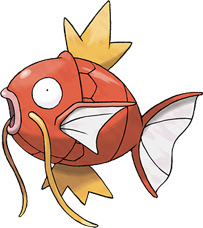
And my secondary point is that I think it is absolutely AMAZING that there is a baseball team named after carp. I mean, if carp is what they love, couldn't they choose something a bit more majestic like Goldfish, or something that can evolve into a Gyrados like a Magikarp?

I've decided that Hiroshima Carps should now be named the Hiroshima Magikarp!


The post that is being referred to above can be found here: http://tabetainjya.com/archives/carp/post_1164/


Tuesday, September 6, 2011

Hey, a quicker, but totally less fun, way to study!

It annoys me that after two years of sort of half-assedly studying for the JLPT I never learned of this website.

It has lots of examples, and english explanations. Obviously, it's not as in depth as my fledgling blog here, but it's still amazing.

Monday, September 5, 2011

In search of TOSHITE and finding TO SHITE

Okay, the very first grammar point in the JLPT II books is misleading... It's so easy that you think that studying for the JLPT is going to be a piece of a cake. Of course, then you continue reading. Oh. Nevermind. This is going to be hard.

Well, in any case, let's talk about this wonderfully easy grammar point, toshite.

I don't really have any clever lyrics, or places I found the grammar point in pop culture, though I wish I did. Instead, I have a band name which I found while looking it up on the interwebs called Rin toshite Shigure.

They are bizarre, to be sure, but I'm quite pleased with the find. I love listening to interesting music.


Okay, so back on track. Let's talk about what toshite means.

Toshite means "as". As in "I came to America as a foreign exchange student" or "I work at the school as a librarian".

Sadly. The to shite in Rin to shite Shigure, is not the form the grammar book is talking about. Why? Well, the easy answer is that it would translate as this:

The drizzle as cold.

Yeah.... that makes no sense... Why is this? Well here is the structure of toshite:
  • Example sentence: I came to America as a foreign exchange student.
  • (Foreign exchange student) (A) toshite (I came to America)(B).
  • As A, B.
  • (Rin)(A) toshite (Shigure) (B) = As a cold, drizzle.

The better answer to why the band doesn't use the toshite we want is a bit annoying and technical, but for the sake of fellow grammar freaks, here it is: Toshite can only be used with a noun in front of it. Rin is an adjective (a na adjective in fact), so what this really is a sentence that can loosely be translated "The frigid drizzle" or something suitably less lame.

Also, a proper toshite sentence needs some sort of clause at the end of it. Not just another noun. So, the long and short of it is that I searched for grammar, but I didn't find it.

Bummer.

But, I think you folks may have figured out why I wrote this post anyway. It's to show you this awesome band, so here's another song for your enjoyment!


Friday, September 2, 2011

In search of TOTOMONI

In the JLPT Level 2 book, the second grammar point is totomini, which pleased me to no end because it's used in a mecha famous song by The Boom. It's not a pneumonic device at all, but it's great for remembering what the grammar form means.

Also, good news! The song is famous enough to be translated, so I've included it here:


The grammar in question is here:

Lyrics:
島唄よ 風に乗り
鳥とともに 海を渡れ

Romanji Reading:
Shima'uta yo Kaze ni nori
Tori totomo ni Umi wo watare

My translation:
Island song, ride the wind with the birds and cross the sea.

So, the JLPT II book goes to great pains to explain that there are three versions of totomoni, but the real truth is that they can all really be translated as "with".

Totomoni is usually used as a more formal version of Isshoni (一緒に)which generally translated as with.

Since the song uses formal language the whole time, a stylistic choice which is supposed to add to the texture and meaning of it, it makes a lot of sense that totomoni is used here. That, and it fits the rhythm better than isshoni.

The JLPT gives three definitions for totomoni,

A: With, as in together with.
B: Concurrently with something else.
C: As one thing changes, another thing changes as well.

While these seem pretty disparate in meaning, you really can just translate it consistently as "with" without having to worry about much else. Look at the sentence from Shima Uta. You know only one of the above definitions work, and that is A. This is because B requires a verb structure of some sort (a noun or a na adjective even need a である) so you know it's not that one. And, C, well that would just make no sense!

So, A it is. Though it really doesn't matter, since you can use with for A, B, and C.

A. I want to spend New Year's with my family.
B. Koboyashi puts all in his energy into guiding his students, along with his research.
C. With growing older, you're body fails you.

Okay, now that I think about it, it only really translates into "with" in my head... So, stream of consciousness her we go!

A. With
B. As well as
C. While/as

There, that should do it, though I do think all of them have a certain feel to them. You decide.

Before I live though, enjoy this six minute version of the song! It's totally better, even with the cheesy slideshow.


I also sometimes talk about The Boom on my blog dedicated to MONGOL800 here.